K. R. T. Hardjonagoro, Surakarta
(Transcribed and translated from Indonesian by R. J. Holmgren
)
FOR SEVERAL HUNDRED YEARS, from pre-colonial times through Dutch domination and into the Indonesian national period, Javanese batik art has maintained an unbroken, underlying continuity. Other Indonesian textiles, for example those of Lampung, ceased to be made at particular stages of local social evolution. During the Japanese occupation, throughout that Indonesia which lives in harmony with tradition, our countrymen experienced intense disorder and change; in the revolution which ensued, we suffered moments and seasons of agony that snapped ties with the past. Yet Javanese batik making continued, and continues still to the present day.
Javanese art and culture have developed two divergent manifestations, which we shall distinguish by the terms “village culture” and “palace culture”, or “folk art” and “palace art”. Middle Javanese and Islamlc-period literature reveals that all events formerly pivoted upon the king’s kraton (palace). It was not merely the ruler’s residence, but the center of government, and to a great extent that of religion, art, and culture. In many ways it was the heart of life throughout the state. During the Pajajaran and Majapahit periods (13ᵗʰ-15ᵗʰ centuries A.D.), as described by Middle Javanese literature, the influence of Hindu-Buddhist1 religion was considerable upon the entire ceremonial pattern of the Javanese people: literature, music, dance, art. Bali, still Hindu-Buddhist, remains a living illustration of this culture, regulated by its religion. But conditions in Java altered during the 15ᵗʰ century, as the Majapahit empire began to lose influence, while the kingdom of Demak, destined to become Java’s first Islamic state, commenced to flourish under the forceful leadership of several Muslim saints (wali). This was the turning point: Hindu-Buddhist Majapahit, ruled by Prabu Brawijaya Pamungkas from a capitol in the interior heartland, fell to the north-coastal Muslim kingdom of Demak under Raden Patah, alias Sultan Alam Akbar I. Much of the classical cultural heritage of Java, still replete with Hindu-Buddhist elements, withdrew within the realm of the kraton, where it was safeguarded and preserved in an environment gradually but increasingly isolated and alienated from the common people. In this seminal event we discern the origins of a “palace” art and culture distinct from that of the masses.
Consider for a moment the social background of this momentous event: while Hinduism and its main pillar Prabu Brawijaya Pamungkas were enfeebled, Islam, rallying about Demak, gathered strength, partially in consequence of foreign commerce. Muslim merchants from other Indonesian islands, from China and from India, came in contact with north-coast ports and supported what can only be described as an incipient cultural revolution. The people in and about Demak began to acknowledge in Islam, in its spirit and in its culture, qualities more compelling and important than those of the ancien regime sponsored by Majapahit. Certainly this revolution could not and did not erase or replace in one single assault the custom, culture, art, social order, and consciousness, the entire Javanese way of life, cultivated over centuries of Hindu-Javanese predominance; nor did the people, albeit guided by teachers and holy men (but possibly subject to a degree of duress which we cannot precisely determine) wholly embrace this new faith of Islam. Yet, a period of wrenching turbulence commenced: Islamic babad (chronicles) tell us that the conflict between Majapahit and Demak, between Prabu Brawijaya and Raden Patah, was “amongst fathers and sons”. So, with the instinct of a threatened species, classical culture, essentially forbidden in its main features by Islam, retreated inside the kraton to seek shelter and sustenance among palace aristocrats. Where previously there was a more homogeneous cultural unity, now there was division. Born in the chaotic 15ᵗʰ century, this antagonism between palace and people’s culture – not merely of status but finally of world-view – persisted and became accentuated to the point that in later times both branches of Javanese material culture flowered in considerable segregation from each other.
No one has yet undertaken a satisfactory or sufficiently meaningful investigation of the age of batik art. One scholar will say that it is very old indeed, while another says, no, it’s not so ancient. To illuminate this question, we first propose to distinguish batik as a technique from batik as the costume that Javanese know today. Concerning the age of the technique in Indonesia, we cite the monochromatic batik traditions of Sunda (West Java) and Toraja (Central Celebes [Sulawesi]), where rice paste or beeswax was applied to handwoven cotton in mostly circular, square, and abstract motifs. After dyeing the reserved designs remained white, on a colored ground. Worked with a simple bamboo nib, the resist described crude but powerful swastikas, spirals, swirling sun-emblems, and so forth: patterns common in Indonesia’s tribal or pre-Hindu societies, and symbols of their most basic concerns (e.g., van der Hoop 1949: XXVIII-XXIX for Sunda; or Langewis and Wagner 1964: pl. 48 and Gittinger 1979: fig. 158 for Celebes). While the visual language of these textiles shares links with Javanese batik that indicate Java’s common cultural base with neighboring islands (and with mainland Southeast Asia), their applications as “blanket”, headcloth, or banner are quite different. If it is claimed that this technique is very old, possibly as old as the Hindu and Buddhist religions on Java, or even as old as the proto-historic “megalithic” period in Indonesia, we may concur.
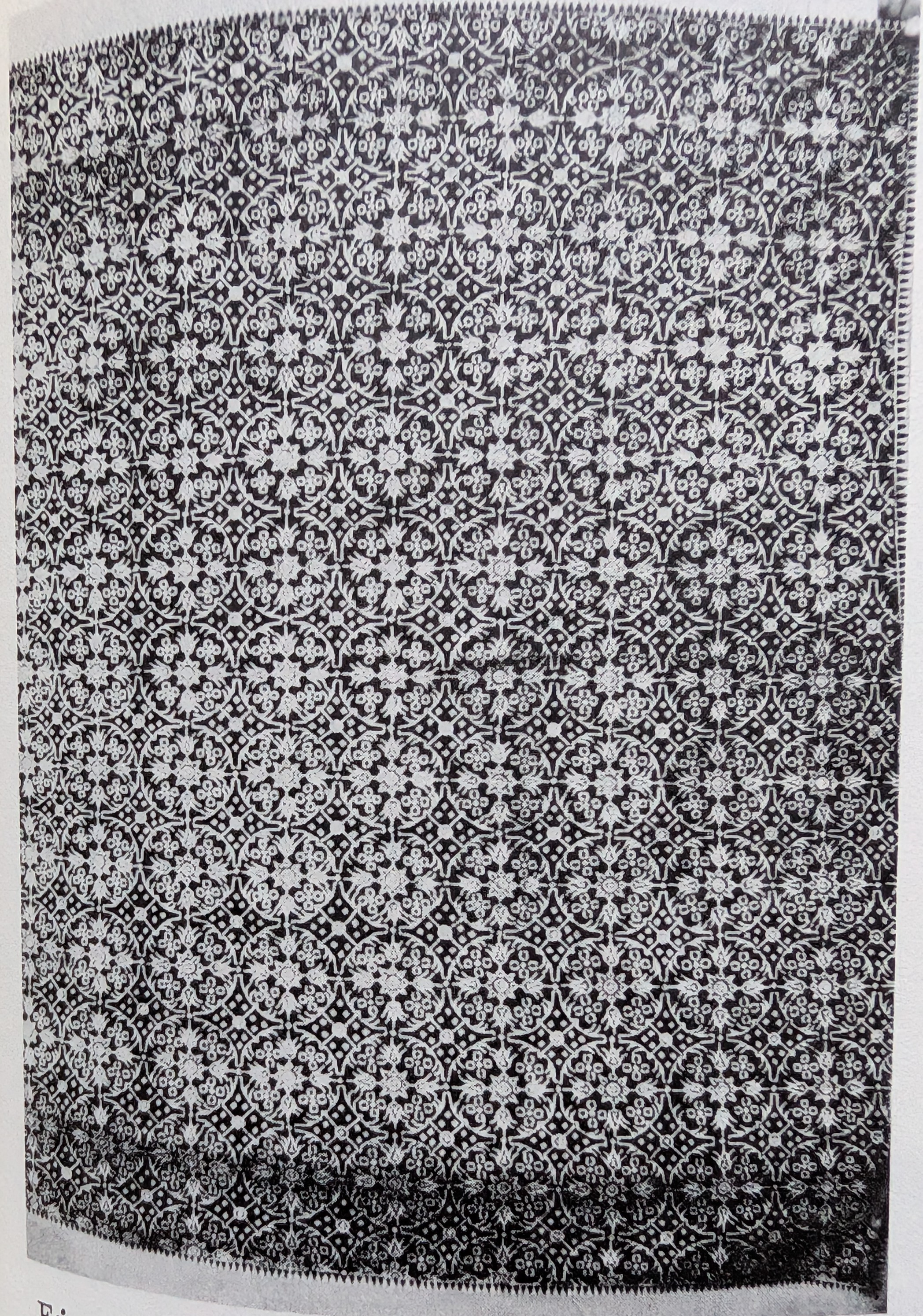
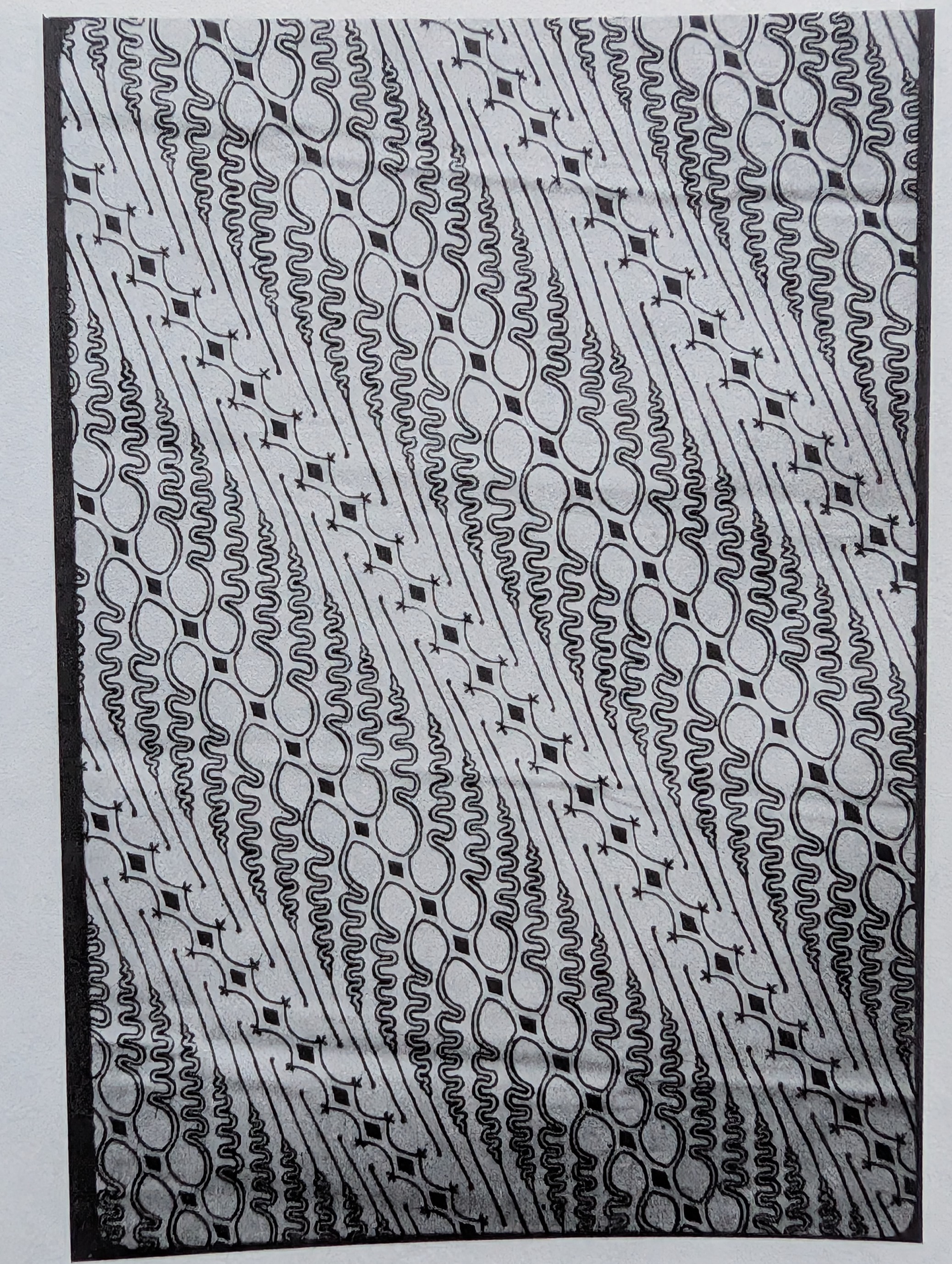
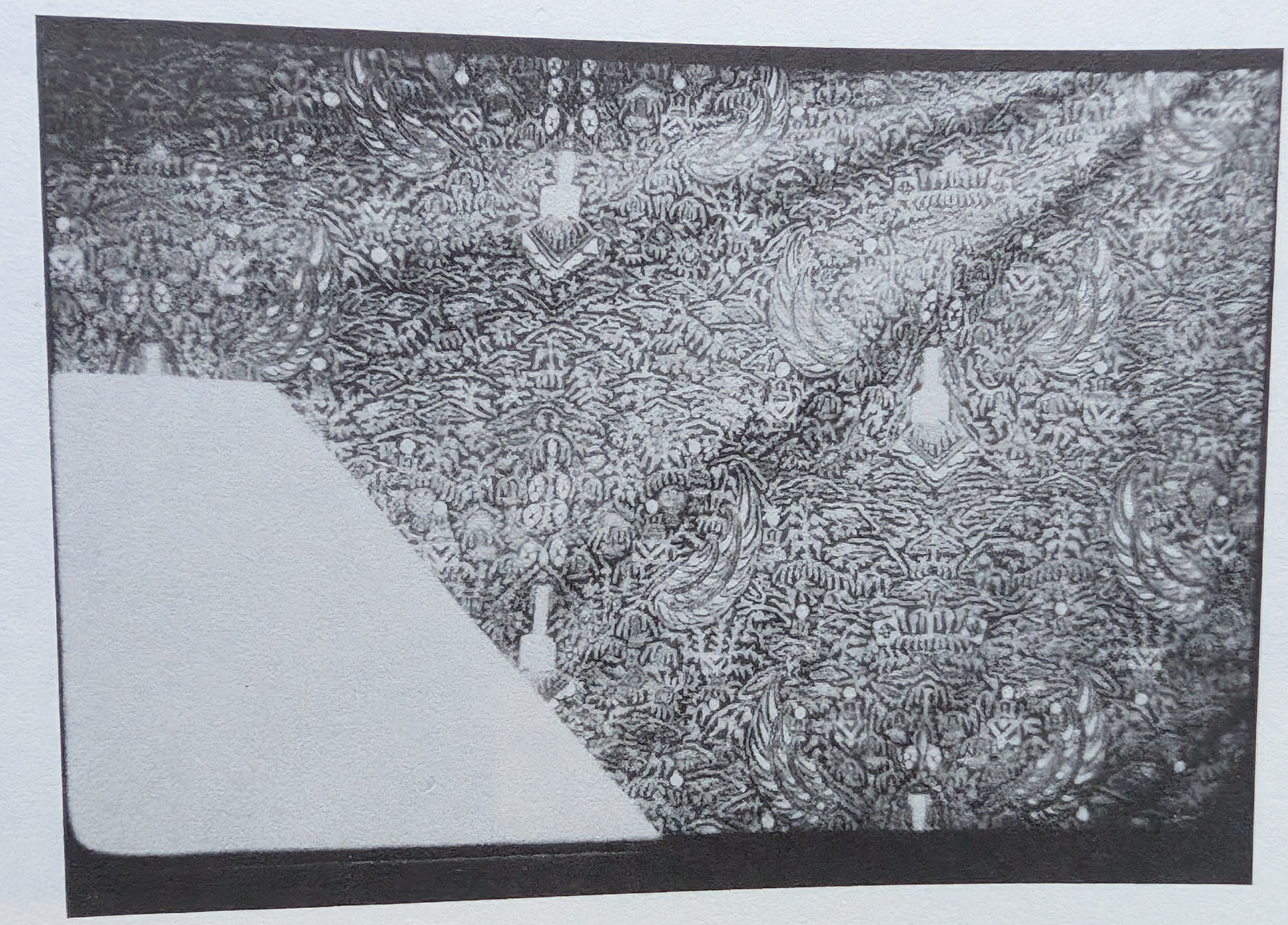
If on the other hand, one defines batik in Java by its use, as a costume or dress material, we confront problems which support our view that basic batik research is far from finished. Consider for instance central Java’s main batik patterns: the ceplokkan, such as ceplok madubronto, ceplok satriyowibowo, ceplok untukbanyu, and cakar (Fig. 1); these are based on intersecting lines of circles, crosses and squares. There are also the parang, the spiral-diagonal designs, including the most sacred, the parang rusak (Fig. 2), as well as parang kusumo, parang gondasuli and parang sonder. And, certainly, the semen motifs (Jav. semi, to sprout or bud) such as semen gunung, semen ngreni, etc. (Fig. 3). Now, it is striking that although we find some of these designs, for example the kawung, displayed on the walls and in the clothing of stone-sculpted figures at ancient Hindu-Buddhist temple sites in Java (e.g., van der Hoop 1949: pls. XXXIV, XXXV, XXXII), we lack any means to identify the patterning technique which the sculptor has reproduced in stone. Is it batik, or is it not? The pictorial reliefs of Java’s classical monuments withhold proof of the presence of batik as costume during the Hindu-Buddhist epoch.
Middle Javanese literature affords another avenue of investigation, through allusions to Javanese textiles and apparel. Javanese literature developed in three basic phases: first, the ancient poems written in Old Javanese with Indian metres; next, Middle Javanese romances composed in Javanese metre; and finally modern Javanese babads, utilizing the language spoken today. We focus here upon the Middle Javanese canon, dating approximately to the Majapahit period (13ᵗʰ-15ᵗʰ centuries A.D.), and four works in particular: the Kidung Sundayana, which deals with the abortive marriage of a Sundanese princess to a Javanese king; the Kidung Rangga Lawe, which relates the story of a Majapahit military commander and thus deals with East Java; the Serat Pararaton, a tale of kings throughout Java; and finally, a text intimately linked with the philosophy and beliefs of its period, the Serat Bima Suci, which concerns the Pandawa hero of the Mahabharata epic, Sang Bima. These four works cover a wide geographical and intellectual spectrum. We will examine in brief their indications concerning costumes worn on ceremonial occasions during that era.
Kidung Sundayana: The excerpt depicts a Sundanese princess (betrothed to Prabu Hayam Wuruk, Majapahit’s most illustrious ruler) as she departs the palace to attend a ceremony. It describes her garb as sinjang patawala wilis, apparently a “green patola hip cloth”.
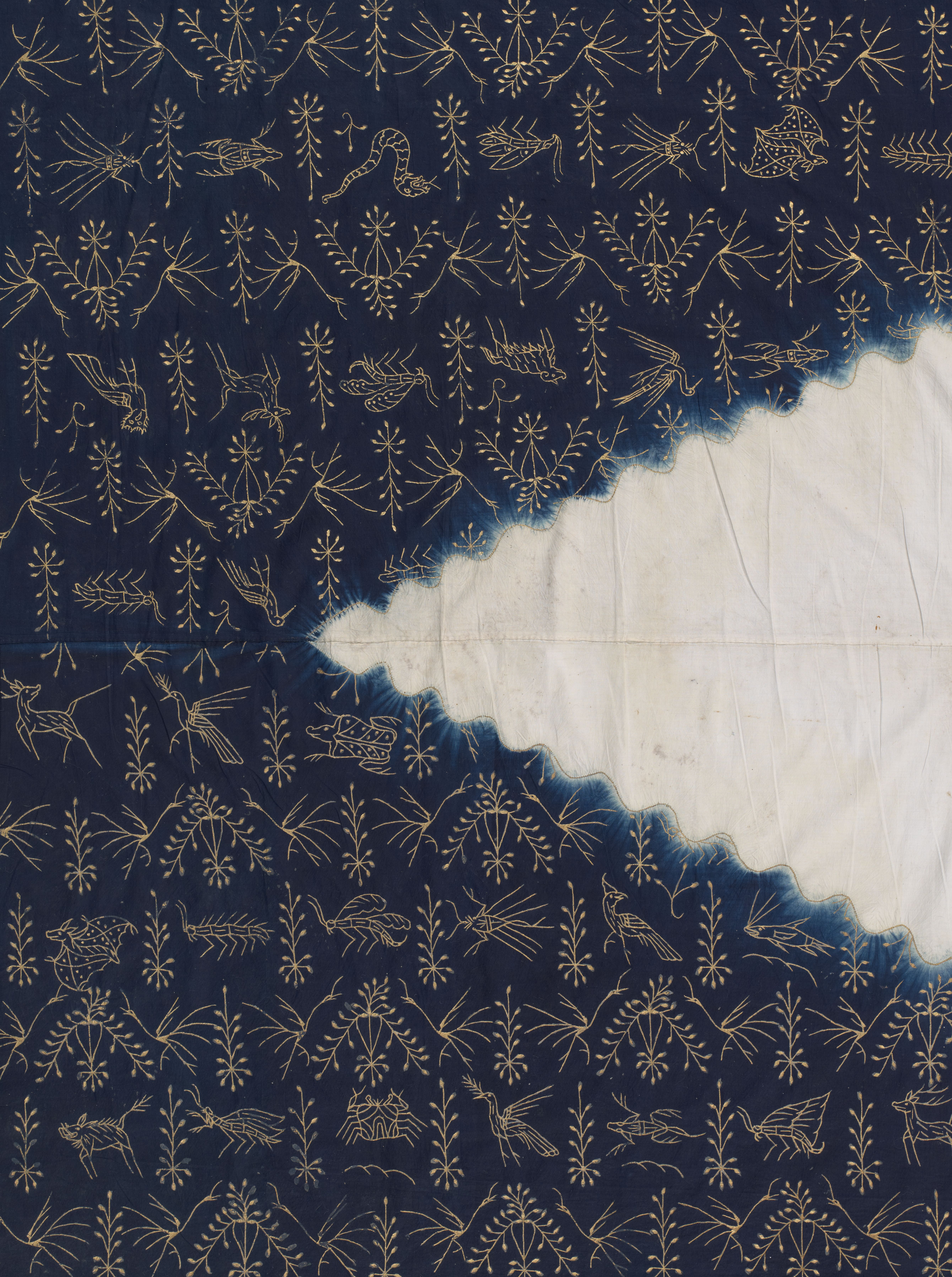
Kidung Rangga Lawe and Serat Pararaton: The first of these texts refers to several costumes. Asabuk gringsing panjalu means “waistcloth [sabuk] of geringsing”. The question is, which geringsing? Is it the Javanese “snakeskin” batik motif (e.g., Gittinger 1979a: background pattern of fig. 83), or the renowned Balinese double-ikat waistcloth of the same name, or might it possibly refer to a pattern or textile of which there is no modern trace? The sabuk of today is merely a narrow waist-sash; and some geringsing of Ball are also used as waistcloths – Balinese geringsing are not (now) woven to the breadth and size of a Javanese batik dress cloth (kain). Consider several other references to geringsing: cawet giringsing wiwijeka, “loincloth of geringsing;” and lancinganira giringsing, “trousers made from geringsing”, a phrase which occurs again (with the same meaning) in the Serat Pararaton as lancingan giringsing. The Kidung Rangga Lawe mentions also asabuk limar sisinom, “waistcloth of [apparently] pale-green silk.“ Limar nowadays is a woven silk material decorated usually with drawn or wrapped threads of gold and silver; this is sometimes also combined with ikat patterning (Fig. 4). Sinom refers to the color of fresh young greenery on fruit trees, green tinged with yellow. Similarly, asabuk limar wilis seemingly represents a “green silk waistcloth”; compare the rare ikat waistcloth called dodot dringin (Fig. 5).
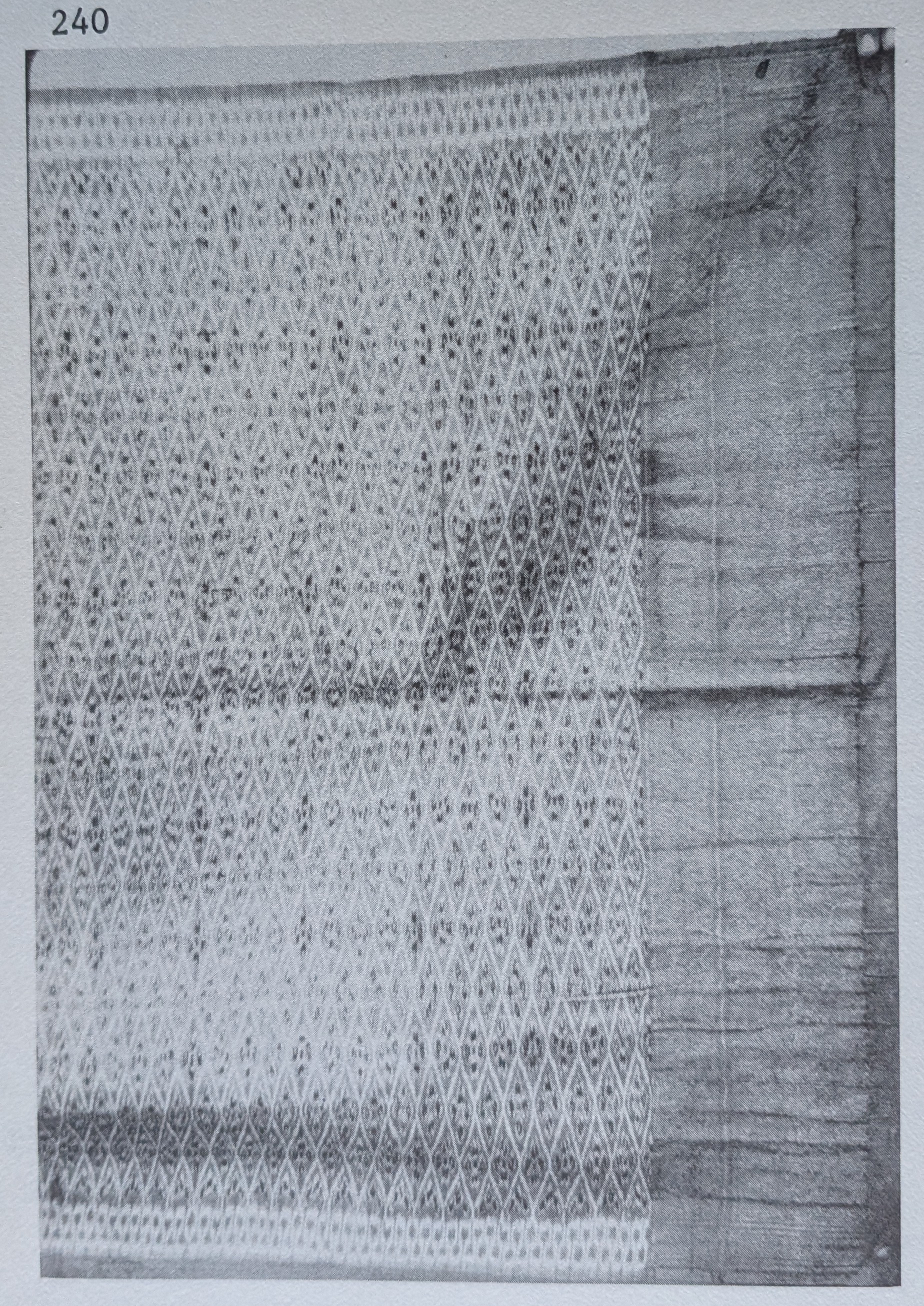
Rangga Lawe was a leader of soldiers; our quotations depict him going to war in geringsing trousers and ageringsing waistcloth (sabuk), or else in a geringsing loincloth (cawat) with a limar waistcloth. These Middle Javanese texts indicate that geringsing was used only for waistcloths, loincloths, and trousers; they offer nothing to persuade us that the term geringsing, as used in pre-Islamic times, pertained either to batik or to hip-cloth dress material. In fact, we believe that Middle Javanese references to geringsing denote double ikat (ikat ganda), a class of textiles which includes the silk patolu of India (still or recently used in Java in the very fashions mentioned by our texts) or the cotton geringsing produced to this day at the village of Tenganan Pageringsingan, east-central Bali. “Snake scales” is the primary significance of geringsing in modern Javanese culture, and it applies not only to batik. In Java the naga, or snake, is believed to represent Dewi Sri, goddess of rice: both signify fertility, the earth. At the same time, geringsing carries other meanings as well: for example, the small geringsing mollusk, possibly associated with the conch-shell attribute of Wisnu. But these interpretations are speculative, an “educated feeling”, as murky as the relationship between Javanese and Balinese interpretations of geringsing. What is clear, is that this pattern possesses, in both Java and Bali, the power to protect against evil, to shelter mankind from ill will and misfortune. Thus in images the Hindu god Kuwera, Lord of Riches, is surrounded by nagas, to guard his treasure. If in the old days someone commissioned a keris naga (a keris with a dragon-snake carved in relief on the blade) and one asked the keris-maker if he had completed the snakeskin design, his response might be: dereng dipun geringsingi, “I have yet to carve the snakeskin”, or the scales articulated on the back of that naga. Geringsing is applied last; it embodies an extra-ordinary power.
Serat Bima Suci: Here we discover the phrase sami poleng bang bintulu lilima. Poleng is a design composed of white and black squares; when we speak of kain poleng we imply a white-black woven cloth. This text however says poleng bang, which suggests a white and red cloth of woven squares. We will deal with color in batik again, but we observe in this context that white is the predominant shade and therefore mentioned first. White is “above” (sky), red is “below” (earth); white is identified with lingga, the male sex organ and principle, while red is yoni or female. Poleng bang is an emblem of fertility. Bintulu is associated with the classical Kala-head form and possesses one eye; it conveys a concept like “the eye of wisdom” but also symbolizes God.
In the texts cited above we find no mention of the batik patterns now considered to be most venerable: e.g., parang rusak, batik nitik, or batik semen. We find only silk, limar, patola, geringsing. In yet another text we read of sutra pinarada mas, “silk painted with gold”, like the fabric with which images of gods are clothed in Balinese temples. It is perhaps significant that the oldest Balinese dances, for example the baris and legong kraton, or those dances performed during temple festivities (odalan), never display batik but always prada, gold-painted silk.
The apparent unfamiliarity with batik dress in classical Middle Javanese literature suggests, therefore, that during the Hindu-Buddhist era batik had not yet come into use as a customary costume in the sense we recognize today. This viewpoint is strengthened by analysis of those among Java’s most ancient ceremonies which are still observed in modern times. Rooted in Hindu-Buddhist (i.e., pre-Islamic) custom, they employ textiles other than batik.
Patchwork garments have had a long-standing ceremonial importance. We remark for instance jubah ontokusumo, the ceremonial coat of Tenggerese priests, patterned with tambal, the patchwork design of alms-seeking Buddhist holymen. Old photographs (e.g., Gittinger 1979a: 123) describe this costume in detail: multicolored cotton patches sewn together to create one large garment. How very disheartening to watch Tengger ceremonies on television today: no longer do we see the patchwork jacket, but rather completely black clothing, like that of the Central Javanese of Surakarta. It is a great pity because, among other things, this was proof of continuity, a link with traditions preserved also for example in wayang kulit, the venerable shadow-puppet theater: Duma, priest to both the Pandawas and the Kurawas, also wore patchwork garments. These Tenggerese priests, whom we consider a remnant of the old culture, claim roots in Majapahit. We mention also in this connection a remarkable heirloom (pusaka) from the kraton of Jogjakarta called Kiyahi Ontokusumo, a patchwork jacket (jubah) like that of the Tengger, which His Highness Srl Sultan is obliged to don when ascending the throne (photograph in Veldhuisen-Djajasoebrata 1972: afb. 27). One more example is the samir (a narrow neck-band or -ribbon) recently donated by the Republic of Indonesia to Washington’s Textile Museum (Gittinger 1979b: fig. 9). This narrow band, patterned with patches, was worn by Kangjeng Raden Ayu Adipati Sedahmirah, a lady who attained the highest rank her prince could award because it was she who attended to the palace treasures.
What is the meaning on Java of patchwork? Again, protection from malevolent Influences, from misfortune: in order that Adipati Sedahmirah herself is immune to any evil power in the heirlooms she must tend; in order that the Tenggerese priest may drive off and purge wickedness amidst the entire Tengger people; in order that Sri Sultan is able to protect his country and subjects.
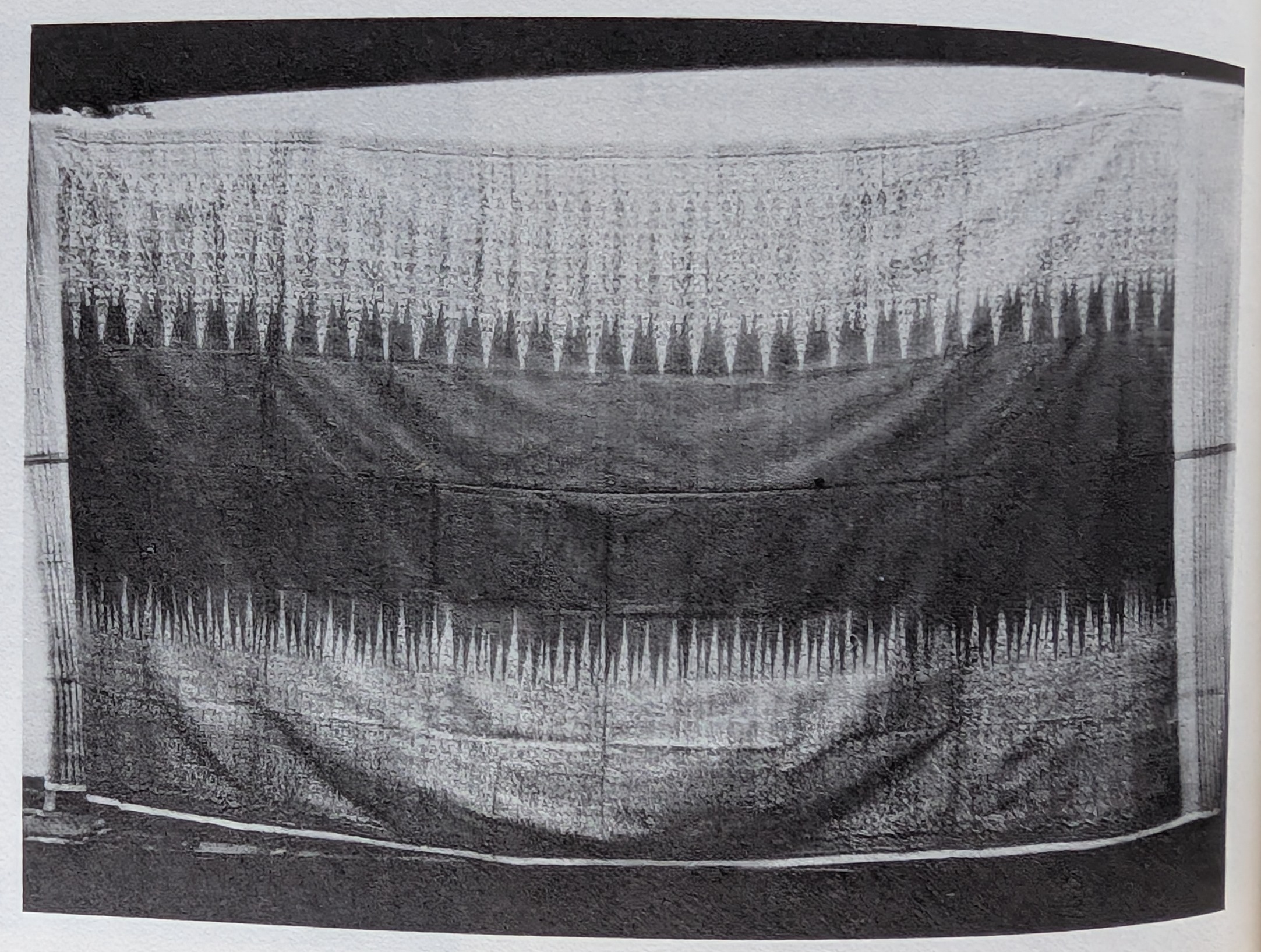
Examine now several old, revered customs of the Central Javanese (Surakarta) palace, which involve textiles other than batik. Brides and grooms are honored, albeit for one day only, with the status of a ruler. In former days they did not wear batik, but rather a cloth called dodot bangun tulak alasalasan pinarada mas (Fig. 6). Dodot are great waist- and breast-cloths, often with draped train; bangun tulak means a white lozenge center surrounded by blue; alasalasan derives from the word “forest” and intends a wood alive with vegetation and animals; pinarada mas describes the decorative technique, gold leaf. Now, the curious thing about the customs associated with an aristocratic bridal pair of Surakarta is that during the Islamic wedding service (ijab nikah) performed by a religious official, batik is worn (dodot semen gendong); but afterward, for the traditional marriage ceremonies which conform to a Hindu-Buddhist ritual pattern (manten temon), batik dress is removed and the groom puts on the dodot bangun tulak alasalasan pinarada mas. Likewise, performers of the most prestigious dance in the Surakarta palace repertoire, bedoyo ketawang, eschew all batik costume: they wear dodot gadung melati alasalasan pinarada mas (waistcloth, as green as the turnip on its snake-like stem [gadung] and as white as jasmine [melati]), which signifies that they dance in homage to Ratu Kidul, Goddess of the Southern Sea.
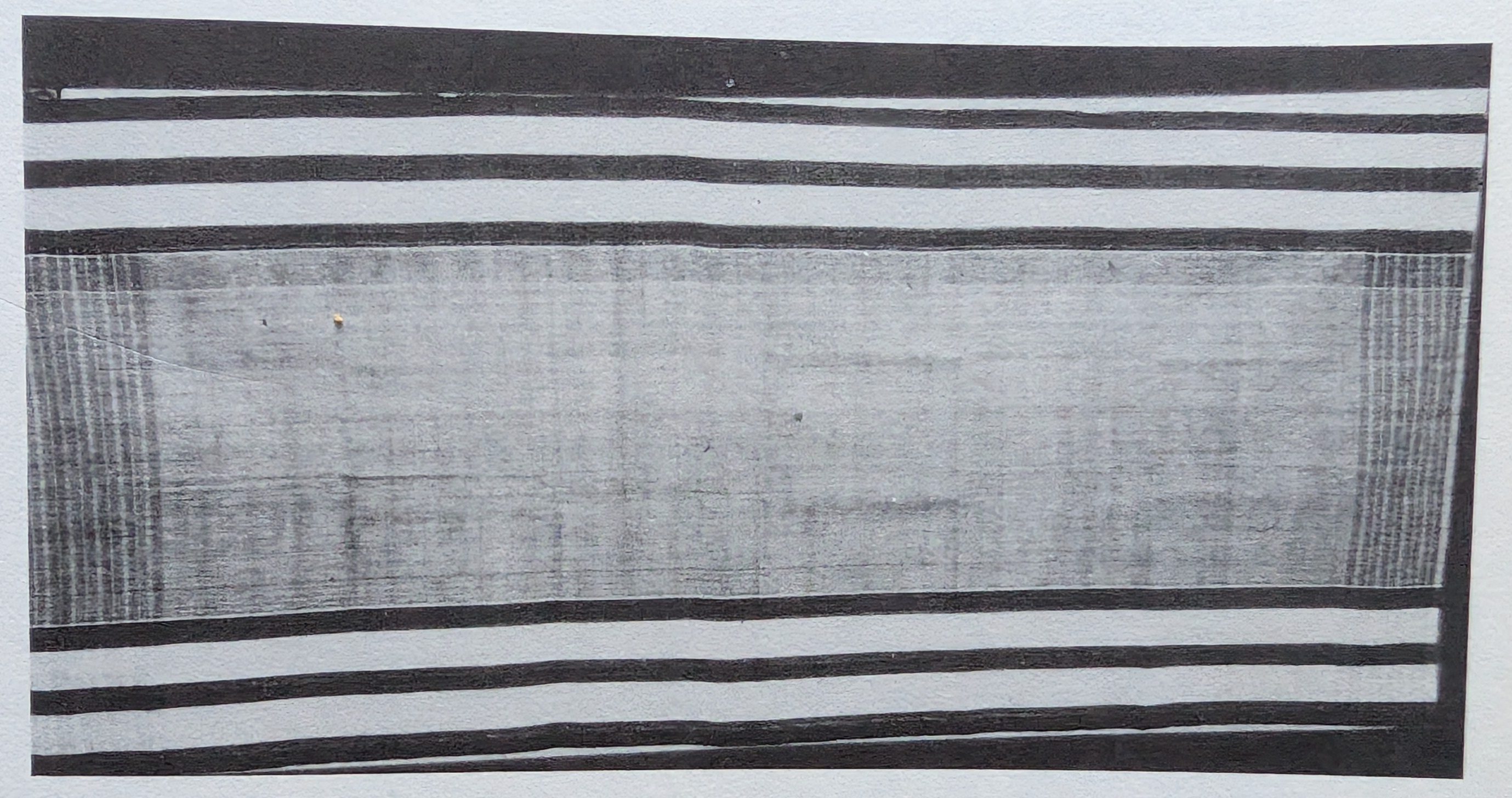
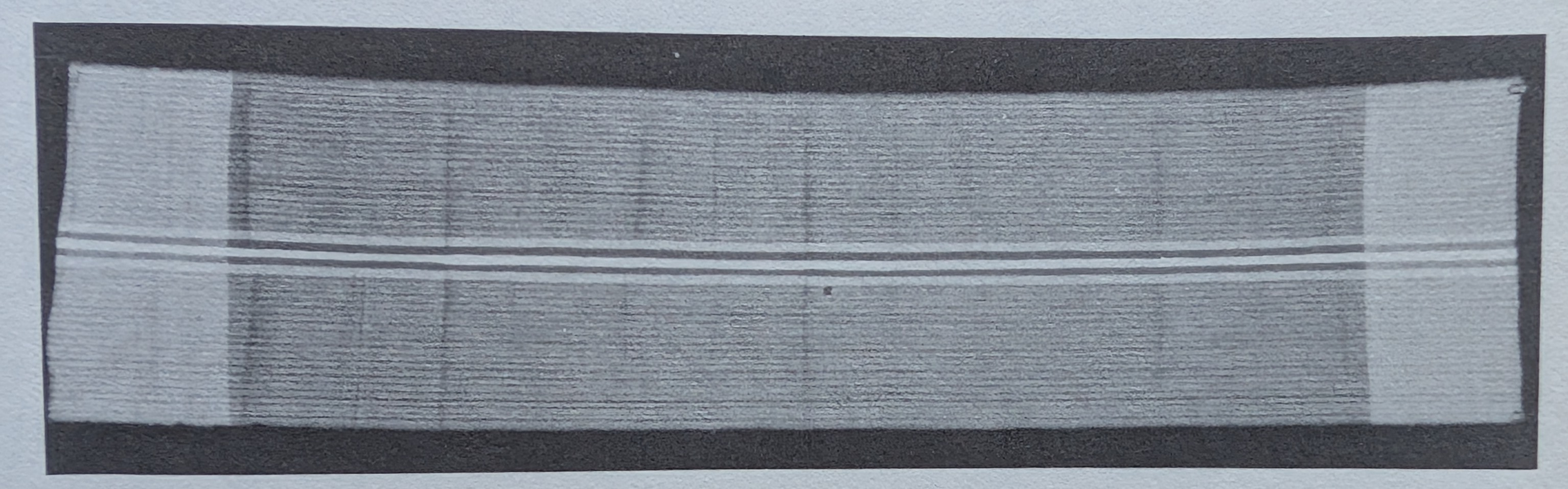
Observe another ritual of the very highest importance, in which Sri Susuhunan, the king of Surakarta, steams rice in a symbolic demonstration of his capacity to provide for his people. Here the sacred steaming pot (dandang kiyahi duda), a palace treasure devoted to the legendary author of rice cooking, beautiful Dewi Nawang Wulan (i.e., Dewi Sri married to Jokotarub, from which union Java’s kings descend), is bound with a woven textile called dengklung (Fig. 7). Or when a woman seven months pregnant is bathed ceremonially by her family, again they use, not batik, but a textile called liwatan (Fig. 8); and thereafter this liwatan is saved to be placed upon the baby’s head if it should become sick. Both liwatan and the dengklung just mentioned possess extra-ordinary power. In Bali also, to cloak the images in the center of the temple, they use woven textiles with a white-black pattern, which protects humankind from any malignancy inherent in those images.
We have shown that Middle Javanese literature of the Majapahit period makes no discernible mention of batik as an element in traditional dress, and likewise our overview of the Hindu-Buddhist ceremonial pattern discovers no trace of batik. However, as soon as we confront Islamic Java, we encounter batik, in oral and court history, in literature, and in eyewitness accounts. This is an apt place to recall the rather blunt conclusion of a very old prince, the lately deceased Panembahan Hadiwidjojo of Surakarta, who held the view we have expressed here: that batik-as-costume was conceived in the interim after Majapahit collapsed, and that it blossomed during the reign of Sultan Agung Hanyokrokusumo at Mataram (central Java) in the early 17ᵗʰ century.
Why did such a sweeping break with the past occur? We believe that during the 15ᵗʰ-16ᵗʰ centuries, as values were challenged and destabilized, Java experienced an authentic revolution, a spiritual and cultural revolution of great intensity. Although we often consider Indonesia to be the exceptional case, a country which embraced Islam without bloodshed, in point of fact the struggle was intense within, and beyond, the cultural realm. Indeed, those who refused to accommodate this revolution, fled physically for their lives; those who supported it, stayed.
We turn now to discuss batik’s spiritual and philosophic background, its “life-environment”, and to consider the consciousness of batik-makers and some implications of the designs they choose. These matters need to be brought back into focus, because the standards and values which obtain today are very different from those which informed the development of batik art centuries ago.
We believe that batik no longer recalls its spiritual, devotional, or philosophic foundations: that batik is now utterly changed. The sense of the sublime, of misfortune or happiness, of love or hate, nobility or contempt – all of these sparked the soul of the batik-maker in ancient times. But today? Nothing. The kraton today is impotent: its artists have died; its function is extinguished; and indeed there are not many still alive who are able to discern, who are even aware of, the former distinction between popular, village batik craft and the greater beauty, refinement, and quality of its kraton counterpart. Today we find only a labor intensive, export intensive industry. The people who run this business have eliminated one critical element in batik-making: they have forgotten that human beings are not merely toilers and wage-slaves, but also agents of God Who is Great. This is an indispensable aspect of the art. Certainly, the men and women who make batik today are still valued in a few respects; their work is still considered more beautiful than that of machines. But they have lost an essential part of their humanness, of the quality of their spirituality and their philosophy, to become at last mere pieces of a tool. Simply take a look in any batik factory today: look for a sign that any batik-maker still treasures the spiritual spark, the fire in the soul, so essential to batik. Observe the surroundings in which batikkers labor: sometimes their workplace is filthier than a garbage heap. We think it strange that in these conditions people should make batik! Because in former times batik was a vehicle for meditation, a process which gave birth to an uncommonly elevated sublimity in man. Truly realized beings in the social fabric of the Javanese community all made batik – from queens to commoners. And it is almost inconceivable that in those days batik had any significant commercial objectives. People batikked, for family ceremonial purposes, in devotion to God Almighty, in each man’s endeavor to know God and draw near His Spirit.
There is a story about Kangjeng Ratu Beruk, wife of Sunan Paku Buwono III of Surakarta, around the end of the 18ᵗʰ century. It concerns kain truntum.
One day Sri Ratu was making batik. Perhaps her exercise was meditational, because the lady’s pain was great: her husband Sri Sunan had rejected her; and of a moment, immersed in her work, she did not notice the Sunan approach. He passed and stopped, to ask, “What are you batikking there? What is its name?” And Kangjeng Ratu Beruk replied, “I’ve not yet given a name – perhaps tomorrow, my Lord – when I am finished I shall give it a name.” From that very instant, Sri Sunan and Kangjeng Ratu felt their intimacy restored. And later, when the dyeing was done, Kangjeng Ratu remembered that in the moment she waxed her pattern, Sri Susuhunan’s love revived; so she gave her design the name truntum, or tuntum, which means “to grow”.
When a man is sick, and is asked, “Are you yet restored to health?”, his answer is Saweg tuntum tuntum, “a little better now, beginning to feel better, the seed of recovery begins to grow.” If you sow the land, and are asked, “Are your fields faring well?”, perhaps you will reply, saweg tuntum tuntum, “the plants grow, the land is greening, tiny leaves appear still pale with youth.” In this short story of Sri Ratu and Sri Sunan, the word truntum means “the budding of love”, and it manifests a genuine function of batik: to calm the disquieted soul. In contemplative practice of batik Kangjeng Ratu Beruk found a certain mercy, felt contact with the life force, moved closer to her Creator; and obviously this vitality shook the soul of Sri Sunan, who at first paid no heed to the amusements of his queen. Suddenly he felt compelled to question, “What are you batikking?” The quintessence of her batik rose up even unto God on High, and from Him issued mercy and pity resulting in reconciliation, or “peace in love”. This is painfully different than the situation we face now: people racing to mass produce, in truth to wreck batik, by sacrificing for profit a tradition of great beauty and dignity.
What in fact is the background of batik? Is it Hindu-Buddhist, is it Islamic, or is it something different? The question is not susceptible to easy answers. For example, batik displays designs like birds, animals, pavilions, and other common/sacred objects. If we assert that the basis is entirely Hindu-Buddhist, we should remind ourselves that during the Middle Javanese period, as that religion weakened, its customs were every day further removed from the real life of the people: why continue to batik? On the other hand, if we hold that the art is a fruit of Islam, we are confronted by batik habits in very direct conflict with the norms of this faith: namely, iconoclastic proscription against the depiction of birds, butterflies, elephants, and all kinds of living things, such as batik displays.
We propose here a theory: some might call it a new theory, but actually it is as old as the fundamental pattern of life shared by every Javanese, whether a learned man or, perhaps, simple Pak Kromo [Everyman] from some remote village near the summit of Mount Merapi. We commence with the observation that both Hindu-Buddhism and Islam are of foreign, alien origin. At the turning point when Majapahit and its Hindu-Buddhist faith were losing vitality, and Islam though still very weak began to burgeon, the Javanese remembered and retrieved certain indigenous Indonesian religious or spiritual elements from the primordial past. At that moment the footing of both major alien religions was uncertain, hesitant, provisional; and in that interim the Javanese discovered the delight and joy of “homecoming”, of reversion to their own honored beliefs and the original faith of their ancestors, in a search for true authenticity.
Here begins the worship of Batara Guru (also known as Hiang Jagad Giri Noto) as the paramount deity, more important than the Hindu Trimurti (Siwa, Brahma, and Wisnu) or Buddha: Batara Guru is now considered Father of them all (despite his philosophic and probably historic identity with Siwa, the Creator and Destroyer of the Hindus). Wayang verifies this relative hierarchy: when the dalang (puppeteer) cuts out or decorates ordinary puppets, he does so without ceremony; but if he should create a Batara Guru, the greatest sesajen (offerings) are prepared. If, during a wayang performance, a puppet is wrapped in yellow silk, it is a sign that this is the holiest of wayang, namely Batara Guru.
Batara Guru the Creator is united philosophically with lingga-yoni, a concept which Javanese personify in Father Akoso and Mother Pertiwi, or Manunggaling Lanang Wadon (the union of male and female principles). We discern this same fecund union in the meeting of mountain and sea, or of Garuda and Naga: the Garuda (mythical eagle and sky/upperworld symbol) signifies Father Akoso or the male principle visualized in lingga; the Naga (snake, an earth/fertility spirit) symbolizes Mother Pertiwi or femaleness, yoni. In wayang stories we are told, Tumengo-o ing akasa, tumungkulo ing pertiwi, sambata bapa-babomu, which are the words of Arjuna as he destroys a fearsome raksasa (demon) who blocks his path: tumengo means “lift your eyes to the sky;” tumungkulo, “cast your eyes down upon the earth;” sambata bapa babomu, “implore your father and mother for help”. Thus Arjuna advises the demon that he may be enjoying the sun’s beams for the last time. Life and death, rise and fall (sangkan paran asal mulaning dumadi), Garuda-Naga, lingga-yoni: all capture and illustrate this esoteric Javanese view of life. Nothing is born without lingga and yoni; there can be neither evil nor nobility absent this sweeping philosophy of existence. Dark must follow light, just as misery tempers joy. There cannot be men without women; and where there is wickedness we discover also good. These are universal symbioses.
In short, Javanese philosophy reveres fertility and, by implication, happiness. In the fullest sense it worships the Creator, in the guise of Batara Guru. Many batik motifs are linked with the philosophy of “[Batara] Guru-ism” and essentially represent an offering to the Creator, to fertility, to lingga-yoni. Thus famous Clrebon patterns like mega-mendung/batu karang stand for this union of Father Akoso (megamendung, clouds) with Mother Pertiwi (batu karang, rocks). Semen-gunung (foliage-mountain) motifs convey the same devotion to growth and fertility, principles summarized in Batara Guru. Many of these sacred patterns cannot be worn by everyone. We shall study one such “forbidden” design, the well-known parang rusak (Fig. 2), by way of example.
Parang rusak has provoked several interpretations: some say it symbolizes sunbeams; others believe it depicts lotus blossoms only partially opened; or, further, a kind of divine auriole, a holy radiance. Parang rusak appears as a motif in several media besides batik, e.g., carved decoration of gamelan instruments. We often find it also, under the name modang, in woodcarving and as a border design on batikked headcloths. Our own inclination is to the first-mentioned interpretation, parang rusak/modang as an emblem of the sun, i.e., of the brilliance or grandeur of the Universe and thus of Batara Guru. One man among living men represents Batara Guru, and that is the king: he alone is permitted to wear the pattern. Behold the golden throne of Sri Sunan Paku Buwono at Surakarta, supported by a tiger skin, and recall that the tiger skin is one of Siva’s attributes; the lord of Surakarta is in fact Siwa, or more particularly Batara Guru. As Batara Guru he symbolizes the Universe. Traditionally, he alone and no one else in that palace can wear parang rusak. The heart of this matter is that all the exclusive “forbidden” patterns (larangan) aspire to the same philosophic objectives; and we believe that designs such as parang and ceplok were all inspired by Guruism.
In order to demonstrate the integrity and harmony of batik, we want to touch once more upon the use of color. Color conveys in a different manner the same ideas batik communicates through pattern. The primary Indonesian color combinations (and very clearly this applies not only in Java but throughout the entire archipelago) are white-red and white-black. White-red symbolizes lingga-yoni (in Javanese terms) or fertility; it is the color scheme which represents the oneness or unification of men and women. White-black symbolizes mountain and sea, sangkan paran or asal mulaning dumadi: life and death, beginning and end. When we listen to the gerong (choral accompaniment) of bedoyo ketawang dance, one sentence in particular pierces mortal men, yen mati ngendi surupe kyai, “after this life, where are we bound?” It is inseparable from sangkan paran: sangkan means “where do we come from?”; paran asks, “where do we go from here?” Or asal mulaning dumadi: asal mula, “the origin of”; dumadi, “existence”. Is this not the essence of all human philosophy: whence do we come, and whither are we bound? The cloths worn by the bridal pair at their ceremonial meeting, dodot bangun tulak, are white-black. It is a reminder: what are our roots, and where lies our goal?
Thus, during this pivotal medieval phase Siwa, Brahma, Wisnu, and Buddha no longer play a role, because as the paramount deities of competitive “institutional” religions they cannot be harmonized with Islam. But asal mulaning dumadi, sangkan paran, Batara Guru, Hiang Jagad Giri Noto, the Universal Creation, and so forth: although these were once ideas affiliated in some measure with Siwa, here in Java they are inalienable, “at home”, and thus different; in Java they are the core of a world-view cherished even by people who acknowledge Islam. They are concepts of men who seek peace, peace in the heart, peace in creativity – goals within our grasp if we are devoted to the worship of our Creator. This is the conceptual and spiritual environment in which Javanese culture, and Javanese batik, arose.
The ideas we express here, the themes we recapitulate in different manifestations, are difficult to render sharply because our explanations are really only comprehensible from within the world of Javanese thought, the environment that spawned them. Truly, they are far easier to discuss with old Pak Kromo in his distant village on the mountain, with a man still immersed in and close to that Creation: Pak Kromo, who every day still bathes in mud to plant his padi, who still remembers to give offerings to Dewi Sri at harvest time, who with his ani-anl (reaper’s knife) in hand patiently and respectfully cuts rice stalks one by one and, with a pure and fervent heart, carries those grains home as if they were Dewi Sri herself. So attached is he to the life-breath of his village, that each year he proffers gratitude for the Creation – offerings not merely for Dewi Sri, but to cleanse and purify his community from the sins of its inhabitants. Offerings to the water, to the earth, to the village spirits arise from a belief in the primacy of the Created Universe, the grace of which is peace in the soul. Go to the village and ask Pak Kromo his religion. The answer, of course, is Islam, but what do we actually observe? If a woman is menstruating, she is not permitted to join in the harvest of rice, for she is not considered cleansed. Every year the villagers prepare offerings to the guardian spirits, usually a tree (punden). They listen earnestly to the wayang kulit story of Sri Mulih concerning the origins of the rice cult. These village habits hardly differ in detail from those we observe in Hindu Bali at the temple ceremonies. The sesajen bekakak of Jogjakarta (where a rice doll or puppet filled with palm sugar is shattered and the sweet pours out) is in essence a blood offering to the earth, parallel to the sabungan ayam of Bali (in which blood of a fowl is sprinkled on the soil to purge that island from all kinds of evil). But what will a Javanese tell you? Does he talk about Siwa, Brahma, Wisnu? No! he worships the Creation. Who is the Creator? Batara Guru. And where does Batara Guru reside? “Hiang Jagad Giri Noto”. He does not say Mount Kailasa (Siwa’s abode, and source of the concept), but rather Hiang Jagad (Lord of the Universe) Giri Noto (the King enthroned on the mountain) – i.e., the Creator of the whole world, from the sea to the highest mountain top!
This is the environment and the heritage of batik! He who does not grasp this philosophy of life is highly unlikely to create worthy batik or meaningful patterns. In fact, it’s impossible.
People sometimes say to me, “Hardjonagoro, you’re a peculiar man, still eager to get your feet dirty on rough village paths.” It’s the same thing: I also yearn to be with men who know Nature, who are still conscious of our life environment and its roots. For me, it is the only path by which I can maintain and nourish the batik that I create in this modern age. I have no desire to restrain the progress of Indonesia and her people; it would give me no pleasure to turn back the clock a hundred years. I believe with my whole heart that culture cannot be brought to a standstill: it must evolve (nunggak semi). However, it is imperative that our culture not develop like a mutant cell, estranged from its kind. If Indonesia’s traditions die of their own sickness, it is a sin; but if we kill them in full comprehension, consciously and arbitrarily, that is a crime.
Every day Indonesia and her people become stronger, larger. In former times our ideal model of manhood was a figure slight and refined, very feminine, like Arjuna. Today, if we hope to enter the National Military Academy, someone of stature less than 5'2" (160 cm) cannot get in. Today we admire men who are husky and handsome, like Gatutkaca the son of Bima. In dance, too, formerly our movements were controlled and petite, like the classic ukel karno (ear gesture) in which a performer moves her hand to her ear and makes a circular motion. Today this movement is considered inadequate, too discreet; today the dancer exaggerates and expands – her hand moves much higher than her ear. Bigger is now better, in people and in art. But if we forget ukel karno altogether, if we then substitute something else, without comprehension of asal mulanya – of its source, its philosophy, its relation to our heritage, the connection with asal mulaning dumadi, with the Creation – then we recklessly trample upon our own traditions. Yet at the same time, if we are rigid and conservative, if we cannot rejuvenate old patterns rooted in our heritage and the world of nature, if we fail to accommodate the needs of our own age, it means that we will suffocate in that tradition. Both are sins, and a pity.
Babad tradition offers an appropriate metaphor, called nunggak semi. It envisions an old tree, truly no longer fertile; and yet . . . no! it still buds, it will sprout green and fresh again, husbanded amid wild growth – over there, beside stumps of dead wood.
Gittinger, Mattiebelle
1979a Splendid Symbols: Textiles and Traditions in Indonesia.. Textile Museum, Washington, D.C.
1979b ’’Conversations with a batik master”, .Textile Museum Journal. 18: 25-32.
van der Hoop, A.N.J. Th. a Th.
1949 .Indoneslsche Siermotieven.. Koninklijk Bataviaasch Genootschap van Kunsten en Wetenschappen, Bandoeng.
Langewis, Laurens and Frits A. Wagner
1964 .Decorative Art in Indonesian Textiles.. C.P.J. van der Peet, Amsterdam.
Veldhulsen-Djajasoebrata, Alit
1972 .Batik op Java.. Museum voor Land- en Volkenkunde, Rotterdam.